
How Long Do Refurbished Laptops Last?
A refurbished laptop that fails after six months usually had issues long before it reached the buyer. A refurbished laptop that runs reliably for years is rarely down to luck. It comes from the quality of the original hardware, the standard of refurbishment, and how the device is used after redeployment. So, how long do refurbished laptops last? In most cases, a professionally refurbished laptop should deliver another three to five years of useful life, and sometimes longer.
That estimate is broad because refurbished devices are not all equal. A five-year-old business-grade Lenovo ThinkPad or Dell Latitude can easily outlast a newer consumer laptop if it has been tested properly, fitted with sound parts, and deployed for the right workload. The question is less about whether a laptop is refurbished and more about what was refurbished, how it was validated, and what you expect it to do.
How long do refurbished laptops last in real use?
For general office work, web use, schoolwork, and most admin tasks, three to five years is a realistic expectation. If the laptop starts from a strong hardware base and receives sensible maintenance, that can extend further. Many business devices are built for longer service cycles than low-cost retail models, which is why they often perform well in second or third life deployment.
Heavier workloads change the picture. If the device is expected to handle design software, data-heavy applications, software development, or sustained multitasking, the practical lifespan depends on processor generation, RAM capacity, storage speed, and thermal condition. A refurbished laptop may still function for years in those cases, but its useful lifespan for that specific role may be shorter if the specification is already near the limit.
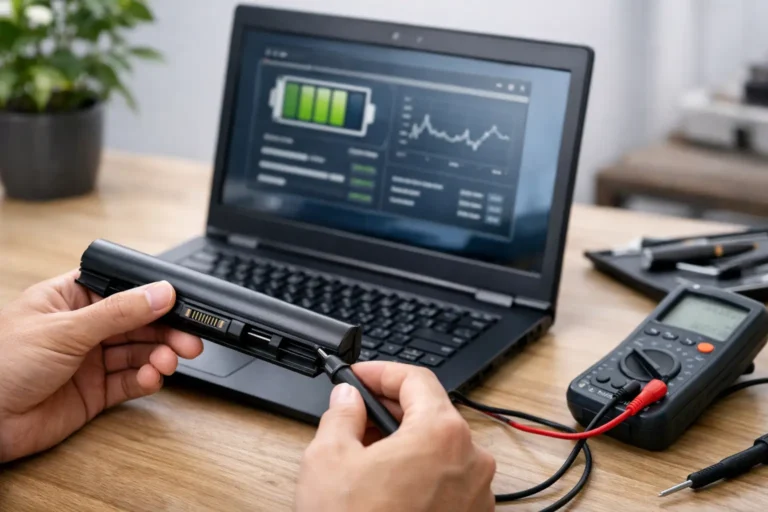
Battery life is another factor. The laptop itself may last years beyond the original battery, but mobile usability depends on battery health. A well-refurbished unit should have battery status checked and reported clearly. For some users, especially businesses redeploying field devices or schools needing all-day use, battery condition matters almost as much as CPU and memory.
What actually determines lifespan?
The biggest factor is hardware class. Business laptops usually last longer than entry-level consumer machines because they are designed for repeat use, easier servicing, and higher durability. Better hinges, stronger chassis construction, more accessible internals, and more consistent component quality all help.
The second factor is refurbishment standard. A device that has only been wiped, cleaned, and resold is not in the same category as one that has gone through structured diagnostics, component testing, storage health checks, thermal inspection, operating system validation, and cosmetic grading. Refurbishment should reduce uncertainty, not just improve appearance.
Third is component wear. Storage drives, batteries, keyboards, fans, ports, and charging circuits all have different wear profiles. An SSD with good remaining health is a positive sign. A swollen battery, intermittent charging port, or overheating issue is a warning sign even if the laptop boots normally.
Use case comes next. A laptop used for email and browser-based platforms will generally last longer than one running virtual machines all day. The same device can be either a good investment or a poor one depending on workload alignment.
Finally, support matters. The ability to replace a battery, source a charger, upgrade RAM, or swap storage extends real-world lifespan. This is where business-class models often hold their value. They are easier to keep in service.
Refurbished does not mean worn out
There is still a common assumption that refurbished means near end-of-life. In practice, many refurbished laptops enter the market because of fleet refresh cycles, lease returns, or standard IT replacement policies, not because the hardware has failed. Large organisations often replace devices on a timetable. That creates a supply of machines that may still have substantial useful life left.
This is especially relevant in the UK business and education market, where predictable refresh schedules can retire capable hardware earlier than necessary. A well-managed refurbishment process puts those devices back into service with a clearer view of condition than many private second-hand sales can offer.
That does not mean every refurbished laptop is a strong buy. Older processors, unsupported operating systems, or poor battery health can limit value quickly. The point is simple: refurbishment is not a lifespan verdict. It is a process. The quality of that process matters.
Signs a refurbished laptop should last well
If you are buying for a business, school, resale channel, or personal use, there are a few indicators that suggest a stronger remaining lifespan.
A business-grade model is often a safer choice than a low-cost consumer model of similar age. Clear grading and testing records matter because they show the seller is working to a defined standard rather than moving stock quickly. Healthy SSD status, stable thermals, and accurate battery reporting are all practical signs of proper preparation.
Specification balance matters too. An older laptop with 16GB of RAM and an SSD may remain useful longer than a newer machine with limited memory and poor upgrade options. It is not just about age. It is about whether the configuration still fits the job.
Warranty also says a lot. A seller willing to stand behind refurbished devices usually has more confidence in the process used to prepare them.
When lifespan is shorter than expected
There are predictable reasons refurbished laptops disappoint. The first is mismatch. If you buy a low-spec device for a workload that needs more memory, better graphics, or newer processing capability, it will feel outdated quickly even if nothing is technically broken.
The second is incomplete refurbishment. Cosmetic cleaning without deeper testing leaves risk in the system. Heat issues, worn batteries, failing drives, and damaged ports can all appear after sale if checks were superficial.
The third is age at point of purchase. There is a difference between a two-year-old ex-corporate laptop and a seven-year-old machine that has already had a full first life. Both may be refurbished, but the expected runway is not the same.
Software support also affects value. Even reliable hardware loses practical lifespan if security updates, driver support, or application compatibility become a problem.
How to extend the life of a refurbished laptop
A refurbished laptop lasts longer when it is deployed properly from day one. Choose a machine that has headroom for the task rather than one that only just meets minimum requirements. If memory can be upgraded and the workload justifies it, do it early.
Keep the software estate lean. Too many background tools, unmanaged updates, and heavy endpoint clutter can make sound hardware feel older than it is. Thermal care matters too. Dust build-up and blocked vents shorten lifespan by increasing heat stress over time.
Battery habits help, but they should be kept in proportion. Modern batteries wear through charge cycles and heat exposure more than through minor charging patterns. For fleet deployments, the more useful approach is battery health monitoring and planned replacement where needed.
For organisations managing multiple devices, standardisation extends life as much as hardware quality does. Consistent models, imaging, support routines, and replacement parts make it easier to keep devices in service. This is where an end-to-end refurbishment partner can reduce friction by coordinating testing, repair, redeployment, and value recovery through one process, as Refurb X Connect does.
Is a refurbished laptop worth it for the long term?
Usually, yes – if the device has been refurbished to a clear standard and matched to the right use case. The value is not only in lower upfront cost. It is in getting dependable performance from hardware that still has meaningful service life left.
For businesses, that can reduce capital spend while maintaining operational capability. For schools and organisations, it can stretch budgets without dropping below workable specification. For individual buyers, it can mean accessing better build quality than a brand-new budget laptop at the same price point.
The trade-off is simple. Refurbished gives you better value per pound when the process is sound, but less room for error if the seller is vague about testing, battery health, warranty, or component condition. Buying well matters more than buying new.
A good refurbished laptop is not a short-term compromise. It is a practical asset with a second service life, and sometimes a third. If the hardware base is strong and the refurbishment is done properly, years of reliable use is a realistic expectation – not an optimistic one.
The better question is not how old the laptop is. It is whether the device has been restored, tested, and matched to the job with enough care to keep performing long after the first owner has moved on.