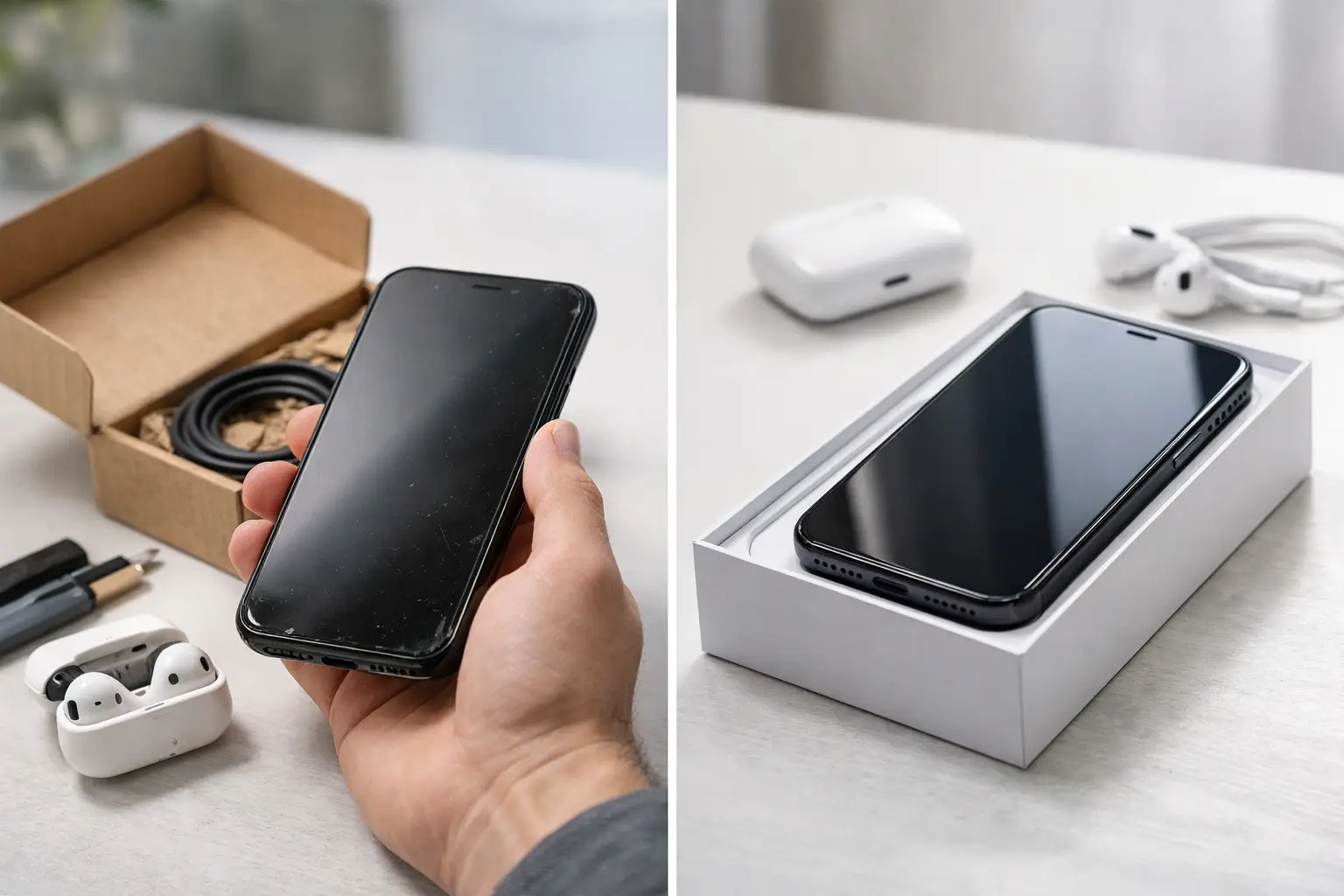
Refurbished Phones vs New Phones
A £1,000 handset looks very different when you need twenty of them for a rollout, or when your current phone still works but the battery no longer lasts a full day. That is where the real question starts. Refurbished phones vs new phones is not just a price comparison. It is a decision about risk, lifespan, performance, support and how much value you want from each device cycle.
For some buyers, new is the cleanest route. For others, professionally refurbished is the smarter one. The difference comes down to what you need the phone to do, how long you need it to last, and how much friction you can afford in the buying process.
Refurbished phones vs new phones: what changes in practice?
A new phone is straightforward. It arrives unused, in original packaging, with a full manufacturer warranty and the latest hardware. You pay for certainty, presentation and the longest possible software support window.
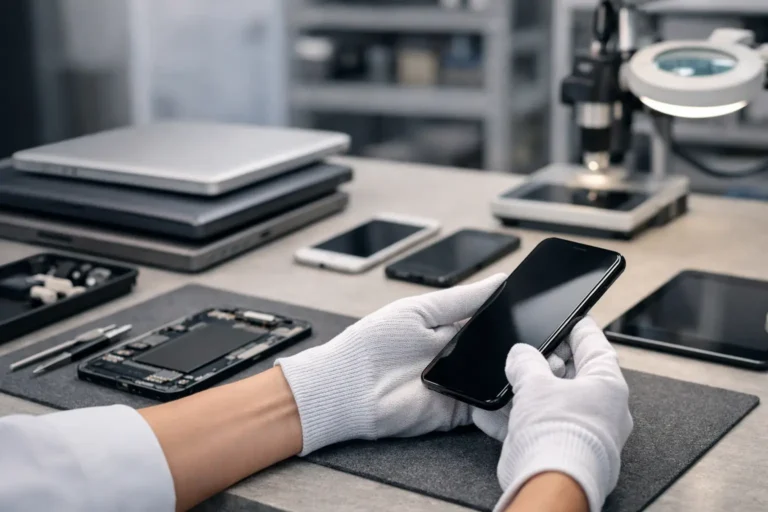
A refurbished phone is a used device that has been assessed, repaired where needed, tested and prepared for resale or redeployment. That process matters more than the label itself. A properly refurbished handset is not simply second-hand. It has gone through diagnostics, grading, component checks and data handling before returning to use.
For business buyers, schools and organisations, that distinction is critical. The real comparison is not used versus unused. It is unmanaged risk versus controlled process.
Cost is the obvious difference, but not the only one
New phones command the highest price because you are buying first ownership, latest release status and a full retail chain around the device. That can make sense if the handset is business-critical, tied to high-spec applications or expected to stay in service for several years.
Refurbished phones reduce upfront spend immediately. In many cases, the saving is substantial enough to change the whole purchasing decision. A business can refresh more devices within the same budget. An individual buyer can move into a better model tier without paying flagship pricing.
That said, the cheapest option is not always the best-value option. If a refurbished device has been processed poorly, the lower purchase price can be wiped out by battery issues, cosmetic disappointment, intermittent faults or inconsistent grading. Value depends on quality control, not just the ticket price.
Performance is usually closer than buyers expect
Many people assume a refurbished phone will feel noticeably behind a new one. Sometimes that is true. Often it is not.
If you are comparing a refurbished premium model from the last one or two generations against a brand-new budget handset, the refurbished device may still deliver stronger performance, a better camera, a sharper display and higher build quality. That is especially relevant for users who want reliable daily performance rather than the latest annual upgrade.
Where new phones hold a clearer advantage is at the very top end. If you need the latest processor for demanding mobile workflows, AI features, advanced imaging or long software support, buying new is the more predictable route.
For everyday business use – email, calls, messaging, cloud apps, mobile device management and web access – a well-refurbished device is often more than sufficient. The device only needs to meet the workload. Anything beyond that is surplus cost.
Battery health is one of the biggest deciding factors
This is where the comparison becomes practical very quickly. A new phone gives you a fresh battery and known baseline performance. There is no uncertainty there.
A refurbished phone may come with its original battery if it still passes the required health threshold, or it may have had the battery replaced during refurbishment. Buyers should not assume either scenario. They should ask what standard has been applied.
For organisations deploying multiple devices, battery consistency matters almost as much as processor speed. Uneven battery condition creates support issues, productivity loss and early replacement pressure. For individual buyers, it affects the daily experience more than benchmark scores ever will.
A professionally refurbished phone with verified battery health can be a strong choice. A vaguely described refurbished device with no battery standard attached is a gamble.
Warranty and support are where trust is tested
A new phone usually includes a manufacturer warranty, standard support channels and a clear path for returns or repairs. That clarity is part of what you pay for.
With refurbished phones, warranty terms vary widely. Some sellers offer meaningful cover with proper testing behind it. Others offer the minimum possible. That difference tells you a great deal about how seriously the refurbishment process is being run.
For business customers, support matters beyond the individual handset. They need consistency across batches, clear grading, documented testing and a reliable point of accountability. If one device fails in isolation, that is manageable. If ten devices arrive with mixed condition or unclear history, it becomes an operational problem.
This is why service structure matters. Refurbishment works best when sourcing, testing, repair and redeployment are handled through one controlled process, not stitched together from separate channels.
Software lifespan can favour new phones, but not always enough to matter
New phones generally offer the longest runway for operating system updates and security patches. If your plan is to hold the device for four to six years, that matters.
Refurbished phones have a shorter remaining support window because they entered the market earlier. For a buyer who replaces devices every two to three years, that may be entirely acceptable. For a school, a fleet manager or a reseller, the right decision depends on the intended deployment cycle.
This is where buying one or two generations behind can make sense. You avoid the price of current-release hardware while still keeping enough software support ahead of you. The sweet spot is rarely the newest and rarely the oldest. It sits in the middle, where depreciation has already done its work but usability remains strong.
Cosmetic condition matters less for some buyers than others
A new phone is pristine. No marks, no wear, no ambiguity.
Refurbished devices are usually graded. One handset may be close to excellent. Another may show visible signs of previous use while remaining fully functional. For a personal buyer, that may be a matter of preference. For a customer-facing business or premium resale environment, appearance can affect perceived value.
For internal deployment, cosmetic grade is often less important than test pass rate, battery condition and reliability. A few surface marks do not change whether the device can support field teams, warehouse staff or classroom use.
The key is alignment. If the aesthetic standard matters, specify it. If function is the priority, do not overpay for appearance you do not need.
Sustainability is a real benefit, but it should not replace due diligence
Refurbished phones extend device life, reduce electronic waste and make better use of existing hardware. That is a material benefit, especially for organisations with ESG targets or internal sustainability commitments.
But environmental value does not excuse poor process. A badly restored handset that fails early is not an efficient outcome. Sustainable procurement still depends on testing, repair quality, secure data handling and realistic redeployment planning.
Done properly, refurbishment reduces waste and spend at the same time. Done badly, it just shifts the problem downstream.
When new phones are the better choice
New phones are usually the right option when you need the latest hardware, maximum warranty assurance, long-term software support or a zero-history device for regulated or high-performance use. They also make sense when standardisation around a current platform is more important than acquisition cost.
If your teams rely on advanced mobile processing, high-end photography, specialist apps or extended support lifecycles, new hardware removes several variables at once. You are paying more, but you are also buying simplicity.
When refurbished phones are the better choice
Refurbished devices are often the stronger choice when budget efficiency, fleet scale, fast redeployment and lifecycle value matter more than owning the latest release. They work well for managed rollouts, education settings, secondary devices, employee upgrades and buyers who want proven hardware without retail pricing.
They also suit organisations trying to recover value from existing assets while keeping procurement and restoration under one process. That is where a connected refurbishment model becomes useful. Instead of treating sourcing, testing, repair and redistribution as separate jobs, they are handled as one controlled workflow.
The better question is not which is best
The better question is which option fits the job.
If you want the latest device, the longest support horizon and the fewest variables, buy new. If you want lower capital cost, reliable performance and a more efficient use of hardware, buy refurbished – but only where the refurbishment standard is clear.
For most UK buyers, especially those managing more than one handset, the decision is less about status and more about control. A phone is an asset. Its value comes from how well it performs in service, how long it lasts and how little disruption it creates.
That is the point to hold onto when comparing options. Buy the device cycle, not just the device.