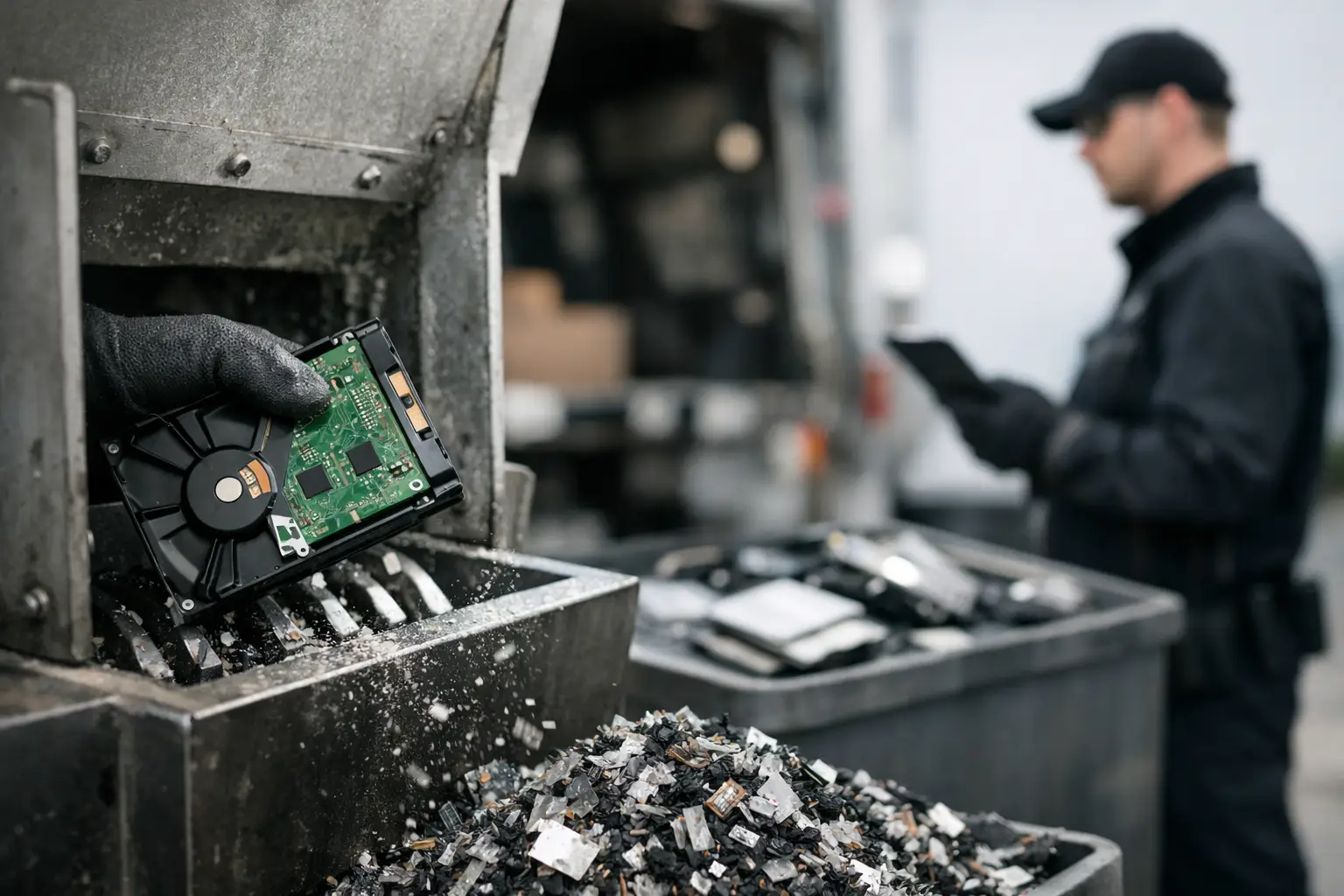
ISO 27001 Data Destruction Service Explained
When a laptop leaves your estate, the real risk is rarely the chassis. It is the data that may still sit on the drive, in system logs, in cached credentials or in storage media that never made it into the redeployment plan. That is why an ISO 27001 data destruction service matters – not as a box-ticking exercise, but as a control point in the wider lifecycle of business IT.
For organisations managing laptop fleets, desktop refreshes, tablets, monitors with embedded storage, or mixed batches of end-user devices, data destruction sits between operational change and residual risk. If it is handled well, equipment can be refurbished, resold, redeployed or recycled with confidence. If it is handled poorly, you can lose asset value, create compliance exposure and complicate every stage that follows.
What an ISO 27001 data destruction service actually means
Strictly speaking, ISO 27001 does not certify a single task such as data wiping in isolation. It is a management system standard. What businesses usually mean by an ISO 27001 data destruction service is a service delivered within an ISO 27001-aligned or certified information security management framework, with documented controls, traceability and clear handling procedures.
That distinction matters. A provider may claim secure erasure, but the real question is whether the process around that erasure is controlled. Who booked the devices in. How assets were identified. Whether serial numbers were matched. How failed drives were segregated. What happened if a device could not be wiped by software. Whether certificates map back to specific assets. Those are the details that separate a usable audit trail from a vague assurance.
For IT managers, schools, resellers and public sector teams, the value is practical. You are not only buying a wipe. You are buying process discipline around collection, logging, handling, sanitisation and reporting.
Why this matters in refurbishment and ITAD
In refurbishment, the objective is often twofold: remove data risk and preserve asset value. Those goals can work together, but not always.
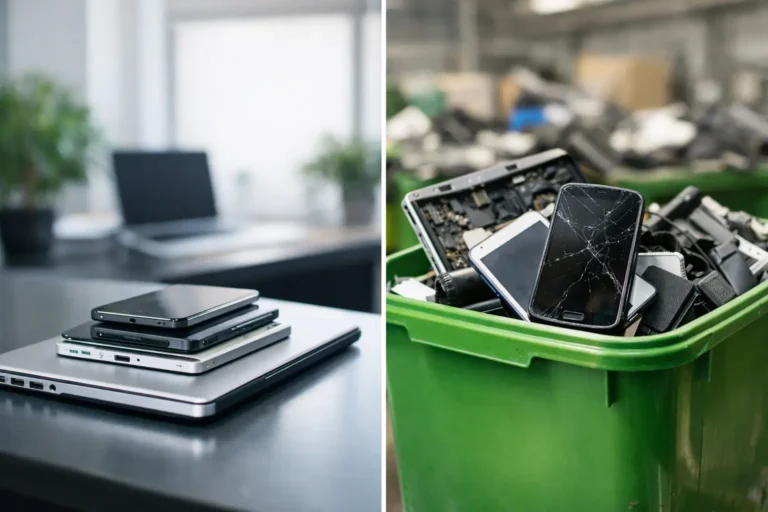
A healthy SSD in a business laptop may be suitable for certified software erasure and reuse, which supports resale and the circular economy. A damaged drive, by contrast, may need physical destruction because software wiping is no longer dependable. That protects data, but it can reduce the resale path for the device unless the drive is replaced during refurbishment. The right outcome depends on the device condition, the security policy and the commercial value of the hardware.
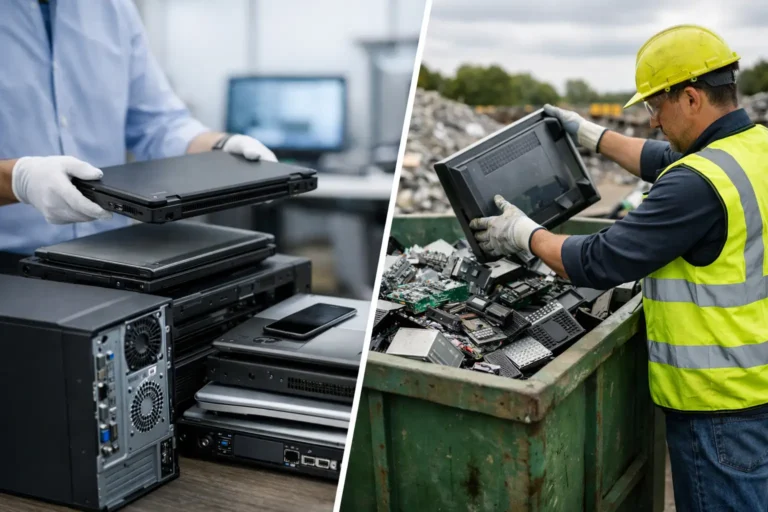
This is where IT asset disposition becomes more than disposal. Good ITAD decisions weigh security, compliance, reuse potential, cost and environmental impact. An organisation replacing 500 staff laptops does not need the same route for every unit. Some devices can be wiped, refurbished and redeployed internally. Some can be refurbished for resale. Some should be dismantled for parts recovery. Some media will require destruction without exception.
An ISO 27001 data destruction service supports that decision-making because it keeps the data handling side controlled while allowing different downstream outcomes.
What to expect from a credible ISO 27001 data destruction service
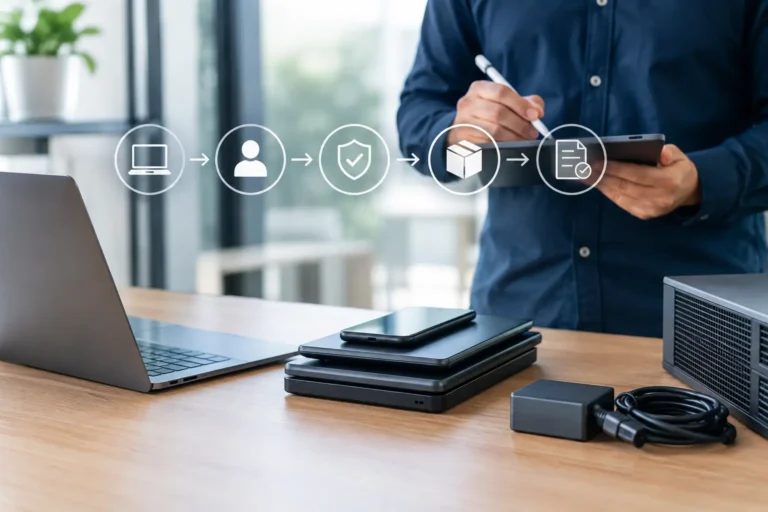
A credible service starts with asset control, not erasure software. Devices should be booked against identifiable records, usually by serial number or asset tag, with a clear chain of custody from collection or receipt through to final status. If assets arrive in bulk and the provider cannot map individual units cleanly, reporting quality usually suffers from the start.
The next stage is triage. Storage media needs to be identified correctly because the method matters. Traditional hard drives, SATA SSDs, NVMe drives and removable media do not all behave the same way. Some can be securely erased by approved software methods. Some fail verification. Some are physically damaged and need destruction instead.
Verification is the part many buyers overlook. A wipe process is only useful if the result is validated and recorded. That record should show what asset was processed, which method was used, whether the erasure passed, and what happened if it did not.
For failed media, the process should move cleanly into physical destruction with the same asset traceability. That is especially relevant for older desktop estates, damaged laptops, dead drives from remote workers, and mixed returns from office closures.
Finally, reporting needs to be usable. A generic certificate covering an entire pallet is rarely enough for enterprise estates. Most organisations need asset-level evidence that can feed audit, internal compliance checks and disposal records.
Software erasure or physical destruction?
This is the question most organisations ask first, and the answer is usually: it depends.
If a device is modern, functional and intended for reuse, certified software erasure is often the better route. It removes data while keeping the drive in service, which preserves value and supports refurbishment. That is particularly relevant for business laptops, desktops and tablets with usable storage still fitted.
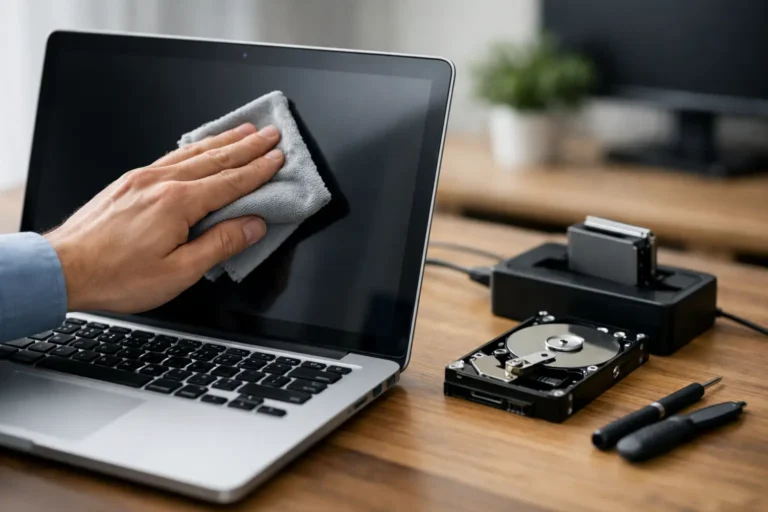
If the media is faulty, encrypted but inaccessible, mechanically damaged, or subject to stricter internal policy, physical destruction may be the safer route. Some organisations apply this standard to high-risk departments or specific data classes regardless of drive condition.
There is also a middle ground. A provider handling refurbishment at scale may erase passing drives for resale paths and physically destroy failed or non-compliant units. That blended approach is often the most commercially sensible. It protects data without discarding reusable hardware unnecessarily.
ISO 27001 and compliance – what it helps with
An ISO 27001 data destruction service does not remove your own responsibilities, but it does make them easier to manage. For UK organisations, secure destruction supports data protection obligations, internal governance and sector-specific handling standards. It can also reduce friction during procurement reviews, supplier checks and insurance questionnaires.
What ISO 27001 contributes is structure. It indicates that the provider works within documented controls for information security, risk treatment, incident handling and continual improvement. That does not mean every provider operates to the same standard in practice, but it is a stronger starting point than informal wiping with limited evidence.
For schools and multi-academy trusts, this can be especially useful during refresh cycles where old staff laptops, classroom devices and admin machines need to leave site quickly but still require clear records. For businesses, it helps when legal, IT and finance all need different answers from the same project – proof of sanitisation, asset reporting and residual value recovery.
Questions worth asking your provider
The best providers make the process easy to interrogate. Ask how assets are tracked from collection to final disposition. Ask whether certificates are issued per asset or per batch. Ask what happens to drives that fail erasure. Ask whether data destruction is integrated with refurbishment and resale, or handled as a separate disposal stream.
It is also worth asking who the service is designed for. A provider that mainly handles household electronics may not be set up for business-grade reporting, batch consistency or fleet-level ITAD planning. By contrast, a specialist in enterprise hardware refurbishment will usually understand the practical concerns around leased returns, warranty status, BIOS access, storage replacement, grading and resale recovery.
That operational context matters because secure destruction is rarely a one-step event. It is part of the wider device journey.
The commercial case for getting it right
There is a tendency to treat data destruction as pure cost. In reality, poor handling is what usually creates avoidable cost.
If assets are not logged properly, resale opportunities are missed. If drives are destroyed by default when software erasure would have been suitable, value can drop. If wiping records are incomplete, internal teams spend time chasing evidence after the fact. If chain of custody is unclear, risk teams become cautious and projects slow down.
A well-run process does the opposite. It supports faster refresh cycles, cleaner redeployment, stronger audit evidence and better value recovery from refurbished IT. For organisations buying and selling across the same lifecycle, that control becomes even more useful. The same discipline that protects outgoing devices also supports trust in incoming refurbished stock.
This is one reason businesses working with refurbishment-led partners often get better outcomes than those using fragmented routes for collection, wiping, testing and resale. When the service sits inside one controlled workflow, there are fewer gaps to manage.
ISO 27001 data destruction service in a circular IT model
Secure destruction and sustainable IT are not competing ideas. Done properly, they support each other.
The goal is not to keep every component in circulation at any cost. The goal is to make evidence-based decisions about what can be safely reused, what should be redeployed, what needs parts recovery, and what must be destroyed. That is how you reduce e-waste without loosening standards around data security.
For a business disposing of end-of-life laptops, or a school replacing a mixed estate of Windows devices and older Apple hardware, the strongest model is usually one that combines secure data handling with refurbishment capability. Refurb X Connect operates in that space because the hardware outcome matters as much as the data outcome.
If your provider can only destroy, you may lose value. If they only focus on resale, you may question the controls. The better option is a service that understands both sides and can prove each decision against the asset record.
The practical test is simple: when a device leaves your organisation, you should know exactly where it went, what happened to the data, and whether the hardware still had a useful life left in it. That is the standard worth insisting on.