
Is Refurbished Tech Worth Buying in 2026?
A new laptop for a growing team, replacement iPads for a school, or a dependable phone without flagship pricing – this is usually where the question starts: is refurbished tech worth buying?
For most UK buyers, the short answer is yes. But only when refurbishment is done properly. Price alone is not the point. The real value sits in the balance between condition, performance, warranty, battery health, data handling, and how clearly the seller can define what has actually been tested and restored.
Refurbished tech is often treated as a compromise. In practice, it can be a sensible procurement route for businesses, organisations, and individuals who care more about outcomes than packaging. If the device is fit for purpose, professionally processed, and backed by a clear standard, refurbished can be the better buy.
Is refurbished tech worth buying for most users?
If your goal is maximum value rather than maximum novelty, refurbished devices make a strong case. The savings can be substantial, especially on business-grade laptops, smartphones, tablets, and desktop equipment that hold performance well beyond their first ownership cycle.
That matters in real terms. A business rolling out 50 laptops does not just compare sticker prices. It looks at lifecycle cost, deployment speed, support risk, and whether those devices will reliably do the job for the next two to four years. The same applies to schools managing constrained budgets and to individuals who want capable hardware without paying for a current-year release they do not need.
The strongest argument for refurbished tech is that modern hardware ages more slowly than many buying cycles suggest. A well-specified laptop from two or three years ago can still handle office workloads, cloud software, video calls, browser-heavy tasks, and most educational use with no practical issue. In other words, depreciation often moves faster than usefulness.
That said, not every refurbished device is automatically a good buy. The answer depends on what was refurbished, who did the work, how the device was graded, and what standard sits behind the sale.
What refurbished actually means
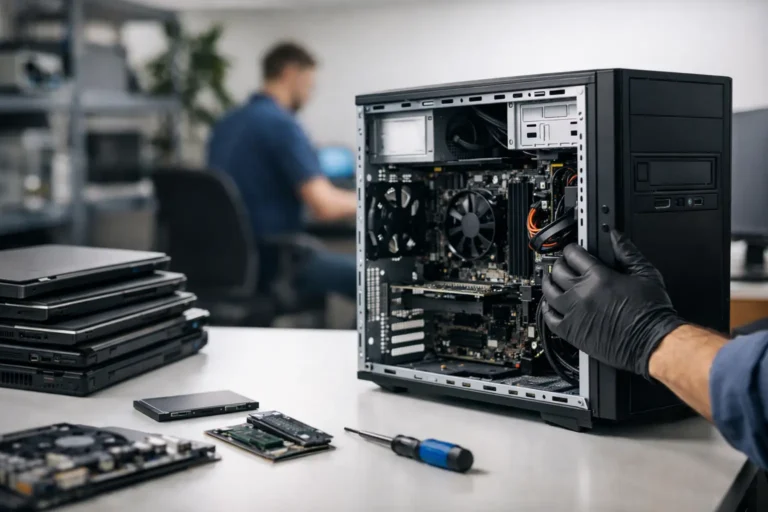
This is where buyers need to stay precise. Refurbished does not simply mean used. A used device may be sold as-is, with no formal testing beyond basic power-on checks. A refurbished device should have gone through inspection, diagnostics, repair where needed, cleaning, data wiping, and quality control before resale or redeployment.
The gap between those two categories is significant. One is a second-hand transaction. The other is a process.
A proper refurbishment route may include replacement parts, battery checks, screen assessment, keyboard and port testing, firmware updates, operating system reinstallation, and cosmetic grading. For business and education buyers, it should also include secure data erasure and clear asset tracking. If that process is vague, the risk rises quickly.
This is why buyers should be less interested in the word refurbished and more interested in the methodology behind it. The label matters less than the controls.
Where refurbished tech delivers real value
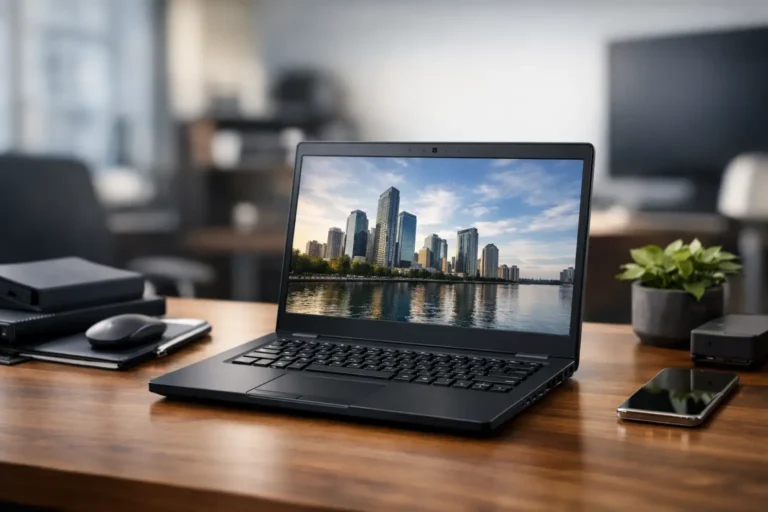
Laptops are usually one of the safest categories. Enterprise models from Dell, HP, and Lenovo are built to last, easier to service, and often far better value refurbished than low-cost new consumer machines. A refurbished business laptop can outperform a brand-new budget device while costing less.
Phones can also be worth buying refurbished, especially when the premium for buying new is hard to justify. The key variables are battery health, screen condition, charging performance, and network compatibility. If these are clearly verified, refurbished phones can offer strong value.
Tablets sit in a similar position. For classroom use, field work, point-of-sale tasks, and home browsing, a professionally restored tablet often meets the need perfectly well. Buyers paying for the latest release may gain very little in day-to-day function.
Desktop PCs and monitors are another category where refurbishment makes practical sense. For standard office work, many organisations do not need current-generation hardware across every desk. Stable, tested equipment with known specifications is often the smarter operational choice.
When the answer is no
There are cases where buying refurbished is the wrong move.
If the device is highly specialised, difficult to repair, or already near the end of its software support window, the savings may not justify the shortened usable life. A cheap device is not good value if it needs replacing again in a year.
Battery-dependent products are a common grey area. Phones, tablets, and ultra-thin laptops can still be excellent refurbished buys, but only if battery condition is addressed properly. If a seller avoids the subject or offers no measurable standard, caution is sensible.
Very old tech is another trap. Some buyers focus on the lowest possible price and ignore supportability, compatibility, and security. That can create hidden costs later in downtime, replacement parts, or inability to run current software.
There is also a process risk. If you are buying in volume and every device arrives with slightly different condition, configuration, or missing accessories, the administrative burden can wipe out the upfront savings. Consistency matters as much as price.
The trade-off buyers should actually assess
The decision is not new versus refurbished. It is certainty versus cost, and sometimes refurbished offers both.
A new device usually gives you predictable condition, full manufacturer support, and the latest specification. In return, you pay a premium, often for marginal performance gains and immediate depreciation.
A refurbished device should lower capital cost and extend the useful life of existing hardware in the market. In return, the buyer accepts that the product has had a previous life. That is not necessarily a disadvantage, but it does mean the refurbishment standard has to be credible.
For many organisations, this trade-off is favourable. If the specification is right, the testing is documented, and the seller provides a sensible warranty, refurbished devices can reduce spend without introducing operational instability.
For individual buyers, the same logic applies. If you want a dependable machine for work, study, or day-to-day use, buying last year’s or even older premium hardware in refurbished condition often makes more sense than buying a brand-new entry-level model.
How to judge whether a refurbished device is worth buying
Start with the seller, not the product photo. You need to know what checks are carried out, how faults are identified, whether parts are replaced to a defined standard, and what happens if the device fails after purchase.
Grading should be clear. Cosmetic wear is one thing; degraded components are another. A few light marks may not matter at all, but weak battery performance, damaged ports, or inconsistent screens do.
Warranty is a practical signal. It does not guarantee perfection, but it does show whether the seller stands behind the process. Buyers should also look for transparency on battery condition, charger inclusion, data wiping, and operating system readiness.
For organisations, there are wider questions. Can the supplier provide devices at consistent spec? Can they support asset recovery, diagnostics, and redeployment at scale? Can they reduce the friction that comes from dealing with multiple vendors for testing, repairs, and resale? That is where a coordinated model matters more than a simple resale listing.
A service-led refurbishment partner such as Refurb X Connect is built around that operational gap. For fleet managers, schools, and resellers, value is not just in the unit price. It is in having one route from collection through restoration to redeployment.
Cost savings are only part of the case
Refurbished tech is also a practical response to waste. Extending the life of working devices reduces unnecessary disposal and lowers demand for new manufacturing. That environmental argument is real, but for most buyers it becomes meaningful when it aligns with cost control and reliable performance.
That is why refurbishment works best when it is treated as part of lifecycle management rather than bargain hunting. Devices should be recovered at the right point, tested properly, restored where viable, and redeployed with clear accountability. Done well, this reduces waste and spend at the same time.
For businesses especially, that can improve procurement discipline. Instead of writing off older equipment too early, they can extract more value from existing assets or buy refurbished stock that meets the same operational need for less.
So, is refurbished tech worth buying?
Usually, yes – if the refurbishment process is credible, the device still fits the job, and the support around the sale is clear.
The best refurbished purchases are not the cheapest ones. They are the ones where the condition is defined, the testing is real, the warranty is sensible, and the expected lifespan still makes commercial sense. That applies whether you are buying one phone or rolling out hundreds of laptops.
If a seller cannot explain how a device was restored, checked, and prepared for reuse, the lower price may be false economy. If they can, refurbished tech is often one of the most rational ways to buy.
A good device does not stop being useful because someone else opened the box first.